Tips & Tricks: Coating Not Cracking
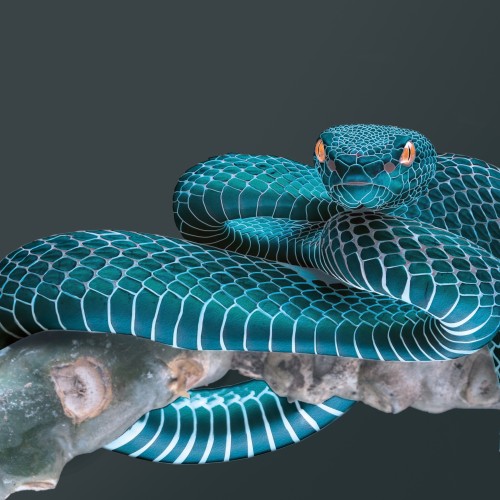
“Cracking” with a web-like pattern of fine cracks mostly occurs if the temperature is too high and the speed or quantity of coating is too low.
Virtually everyone starting out in the world of print product
coating will work up from oilprint varnishes to dispersion
coatings. But things can go badly wrong. Several precautions need
to be taken to ensure a dispersion coating does not end up looking
like cracked, leathery skin.
Dispersion coatings are mostly made up of water (at least 45
percent). After water come styrene acrylates (with or without
pigment), which are responsible for producing the intended effect.
Then there are other components that ensure dispersion is stable
and define properties such as surface tension and rub resistance.
Once the water has dried off, the remaining components meld
together to form a film. This film is odor-free, practically
resistant to yellowing, ideal for coating everything from luxury
print products to packaging for frozen foods and ensures rub
resistance. Press operators can also cut powder consumption,
utilize the full pile height and - because the coating sets quickly
- rapidly move on to further processing.
However, operators who want to make the most of these
benefits must keep a close eye on how much coating is applied. To
do this, they can use a DIN viscometer (ISO 2431) to check the
coating's flow time. To ensure accurate results, it is crucial that
the coating manufacturer's guidelines (warehousing, usage,
processing temperature, emulsification, etc.) are followed to the
letter. Nonetheless, it is all too common for coatings not even to
be stirred properly. Indeed, if all these requirements are ignored,
flow time cannot be calculated properly. This results in inaccurate
profiles and turns the coating application process - which is so
heavily dependent on timings - into a game of chance. Accurate and
regular measurement is particularly important when using a
two-roller system, which can produce larger fluctuations than a
chambered blade system. Using too little coating or working at too
high a speed can lead to problems such as cracking in the coating
layer and ink buildup on the coating form. On the other hand, using
too much coating can result in a halo effect, streaking and paper
distortion.
Operators using the chambered blade system are at an
advantage, as a laser-engraved screen roller ensures that a largely
consistent quantity of coating is applied. That is why this system
is also more suitable for applying Iriodin products and coating
fine fonts and details. When using either of the systems, it is
important to cautiously work up to the optimum contact pressure
between the metering or screen roller and the coating plate. If
this pressure is too great, details can be destroyed or a halo
effect produced. If it is too weak, the coating application process
can be adversely affected.
To achieve application levels that are as uniform as
possible, it is advisable when using the two-roller system to
optimally adjust the gap between the water pan and metering rollers
along their entire length. When using the chambered blade system,
the same applies when adjusting the printing pressure between the
chamber and the screen roller.
To ensure the perfect coating result, it is also important
that dispersion coatings are allowed to dry properly. Because they
dry through evaporation only, exactly the right combination of
infrared radiation and hot air needs to be used. If too much heat
is applied, the layer of ink can "soften," causing sheets to stick
together in the pile. However, the most common problem that occurs
when the temperature is too high and the speed or quantity of
coating is too low is "cracking," when a web-like pattern of fine
cracks forms in the coating, causing it to resemble cracked,
leathery skin. If not enough infrared radiation or hot air is used
for the selected production speed, quantity of coating, etc., the
coating may not dry out properly and this causes sheets to stick
together. However, the same could happen if not enough moist air is
extracted quickly enough at the delivery!
As a rule of thumb, the pile temperature at the delivery
should be 8-10 degrees Celsius higher than at the feeder when
processing paper and 10-15 degrees warmer when working with card.
One of the best ways of checking this is with a portable moisture
meter that has a temperature readout. However, as the optimum pile
temperature will vary depending on a whole range of factors
(specific coating properties, climatic conditions, delivery type,
etc.), it is well worthwhile seeking the advice of an application
engineer.
Heidelberg recommends coatings from the comprehensive Saphira
product range, since these products are ideally suited for use in
Speedmaster presses. That applies to everything from simple
functional coatings to attractive effect coatings and special
Performance Kits for truly impressive quality at maximum production
speeds - double-sided inline coating included.
Info
The products described may not be available in all
markets. Further information is available from your local
Heidelberg representative.
Print Version